
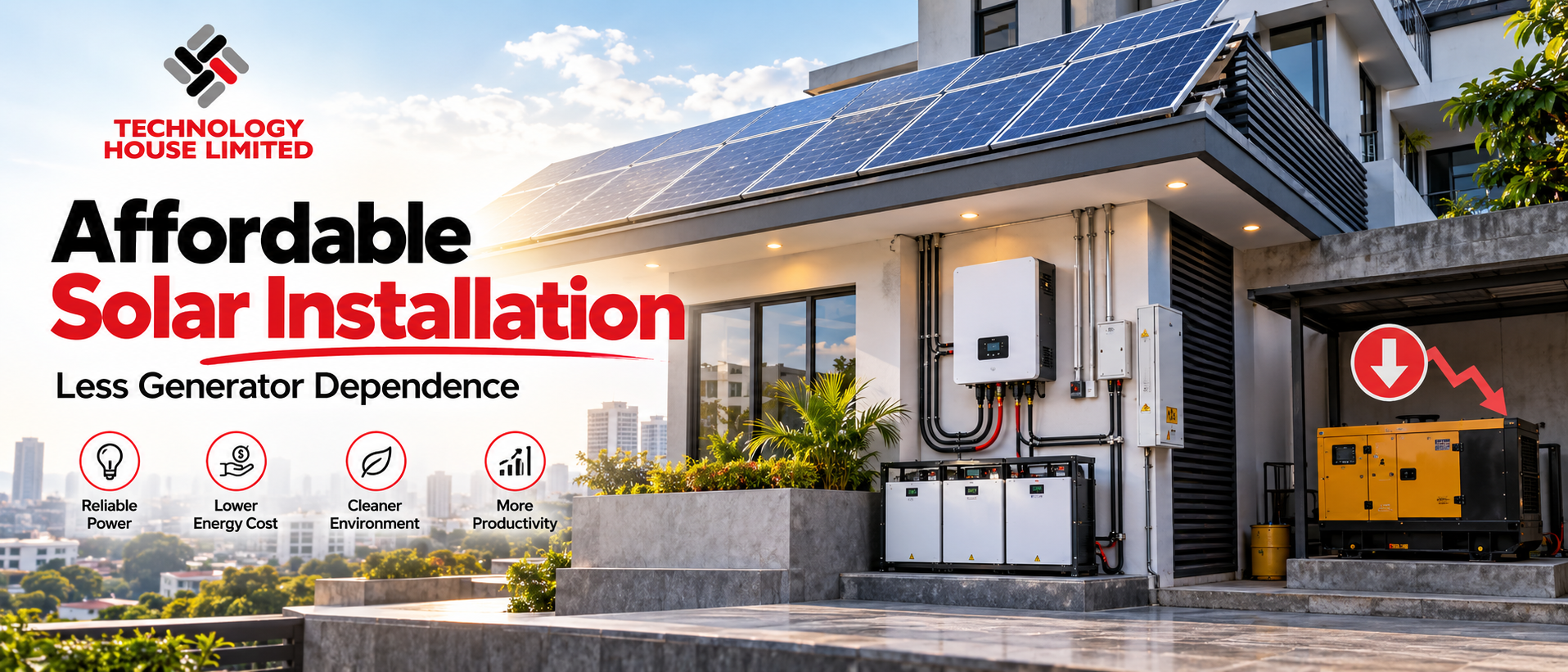
Reliable electricity remains an important concern for many homes and businesses in Nigeria. Frequent power interruptions can make it difficult to work, operate equipment, preserve food, or maintain normal household activities. As a result, many people depend on petrol or diesel generators as backup power sources. However, generators come with recurring fuel, servicing, repair, and operating costs.
Working with an affordable solar installation company in Nigeria can help property owners select and install a system based on their actual electricity needs. This can reduce generator usage while providing a more predictable source of backup power.
Solar energy offers an alternative approach by using sunlight to generate electricity and batteries to store power for later use. Distributed solar systems can support homes, offices, shops, schools, and other facilities, depending on their energy requirements. Nigeria's renewable energy policies also encourage the development and adoption of solar technologies as a way to reduce dependence on conventional electricity sources.
Why Do Nigerians Depend on Generators?
Generators are widely used because they can provide electricity when grid supply is unavailable. They can also support appliances and equipment with higher power requirements, depending on their capacity.
However, generator dependence creates recurring expenses.
These may include:
-
Petrol or diesel costs
-
Routine servicing
-
Oil and filter replacement
-
Battery replacement
-
Mechanical repairs
-
Generator installation and wiring
-
Noise and exhaust emissions
The World Bank has noted that unreliable electricity supply in Nigeria has contributed to widespread reliance on petrol and diesel generators. It has also identified distributed renewable energy as an important solution for improving electricity access and reliability.
Solar installation can therefore provide an alternative for consumers who want to reduce the amount of time they operate generators.
What Should You Consider Before Solar Installation?
Installing solar panels is not simply a matter of purchasing equipment and placing it on a roof. The system should match the property's electricity requirements.
Before installation, consider:
1. Calculate Your Energy Requirements
Start by identifying the appliances and equipment you want to power.
These may include:
-
Lights
-
Fans
-
Televisions
-
Refrigerators
-
Computers
-
Routers
-
Security systems
-
Pumps
-
Office equipment
-
Air conditioners
Each appliance consumes a different amount of electricity. Understanding your total load helps determine the appropriate system size.
2. Determine Your Backup Requirements
Not every appliance needs to operate during a power outage.
For example, a household may prioritize lighting, refrigeration, internet equipment, and fans. A business may prioritize computers, security systems, communication equipment, and essential machinery.
Separating essential and non-essential loads can help control installation costs.
3. Choose Appropriate Battery Capacity
Battery storage is an important part of a solar system because solar panels do not produce electricity at night.
Battery capacity should reflect how much electricity you expect to use during periods without solar generation.
A system with insufficient storage may not provide the expected backup duration. Conversely, installing significantly more battery capacity than necessary can increase the initial investment.
4. Evaluate Roof and Installation Conditions
Solar panels require suitable installation space and adequate exposure to sunlight.
Before installation, professionals may need to assess:
-
Available roof space
-
Roof condition
-
Panel orientation
-
Shading
-
Structural considerations
-
Cable routes
-
Inverter location
-
Battery placement
-
Electrical safety requirements
A proper site assessment can help reduce installation problems and improve system performance.
What Makes a Solar Installation Company in Nigeria Important?
Affordability should not mean choosing the cheapest equipment or installation service available.
A low initial price may become expensive if the system uses unsuitable components, has poor installation quality, or requires frequent repairs.
An affordable solar installation company in Nigeria should ideally focus on value over the entire system lifespan.
Important factors include:
-
Appropriate system sizing
-
Reliable equipment
-
Professional installation
-
Proper electrical protection
-
Battery management
-
Warranty support
-
Maintenance services
-
Transparent pricing
-
After-sales assistance
The World Bank's experience with solar home systems and mini-grids in Nigeria also demonstrates the growing role of distributed renewable energy in expanding reliable electricity access.
What Are the Financial Benefits of Reducing Generator Use?
One major benefit of solar power solutions for businesses in Abuja is the potential reduction in recurring fuel expenditure.
Generators require fuel whenever they operate. Solar panels, however, generate electricity from sunlight without requiring petrol or diesel for each unit of electricity produced.
Potential savings can come from reduced:
-
Fuel purchases
-
Generator servicing
-
Oil changes
-
Mechanical repairs
-
Generator operating hours
However, solar also involves an initial investment and ongoing maintenance. Therefore, investors should compare the total cost of solar ownership with their current electricity and generator expenses.
How to Choose the Right Solar Installation Approach
A practical process can make the transition from generator dependence easier.
Assess → Calculate → Compare → Install → Monitor → Maintain
First, assess your current electricity consumption and generator usage. Next, calculate the loads that solar should support. Then compare suitable system options based on capacity, battery storage, equipment quality, installation requirements, and total cost.
After installation, monitor system performance and maintain the equipment according to manufacturer recommendations. This approach can help property owners make better decisions without investing in a system that is unnecessarily large or unsuitable.
About Technology House
Technology House is a technology-focused company founded by Norman Bwuruk Didam, with a focus on delivering practical technology and renewable energy solutions. The company supports homeowners and businesses looking for reliable ways to improve power availability and reduce dependence on generators. Under the leadership of Norman Bwuruk Didam, Technology House focuses on understanding each customer's energy requirements before recommending a suitable solar solution.
Its approach considers factors such as electricity consumption, system capacity, battery storage, installation requirements, and long-term maintenance. The company aims to make solar energy more accessible by combining suitable technology with professional installation and ongoing support. This practical approach helps customers make informed decisions when investing in solar power for residential or commercial use.
Final Note
Reducing generator dependence does not necessarily require abandoning existing electricity sources immediately. A properly planned solar system can provide an alternative source of electricity while reducing fuel consumption and generator operating hours.
The right solution depends on energy requirements, property conditions, battery needs, equipment quality, installation standards, and available budget. Therefore, a professional assessment from an affordable solar installation company in Nigeria is important before investing.
For property owners and businesses looking for practical solar solutions, you can rely on us at Technology House Limited . We can help you explore suitable options based on your energy requirements. Visit our website now to learn more about our solar and technology solutions.
Frequently Asked Questions
Is solar cheaper than using a generator in Nigeria?
Solar can reduce recurring fuel and generator maintenance expenses, but the overall financial benefit depends on the installation cost, system lifespan, electricity consumption, battery replacement, and generator usage.
Can solar power a house without a generator?
Yes, a suitably designed solar system with adequate battery storage can provide electricity without a generator. However, the required system size depends on the appliances, energy consumption, and desired backup duration.
How long can solar batteries provide backup power?
Backup duration depends on battery capacity and the electrical load being powered. A smaller load will generally allow the battery to last longer than a larger load.
Is solar suitable for Nigerian businesses?
Solar can be suitable for many businesses, particularly those that experience frequent power interruptions or high generator operating costs. System capacity should be based on the business's actual electricity requirements.
What should I check before hiring a solar installation company?
Check the company's installation experience, equipment specifications, system-sizing process, warranties, maintenance support, pricing transparency, and ability to provide a solution suited to your electricity requirements.